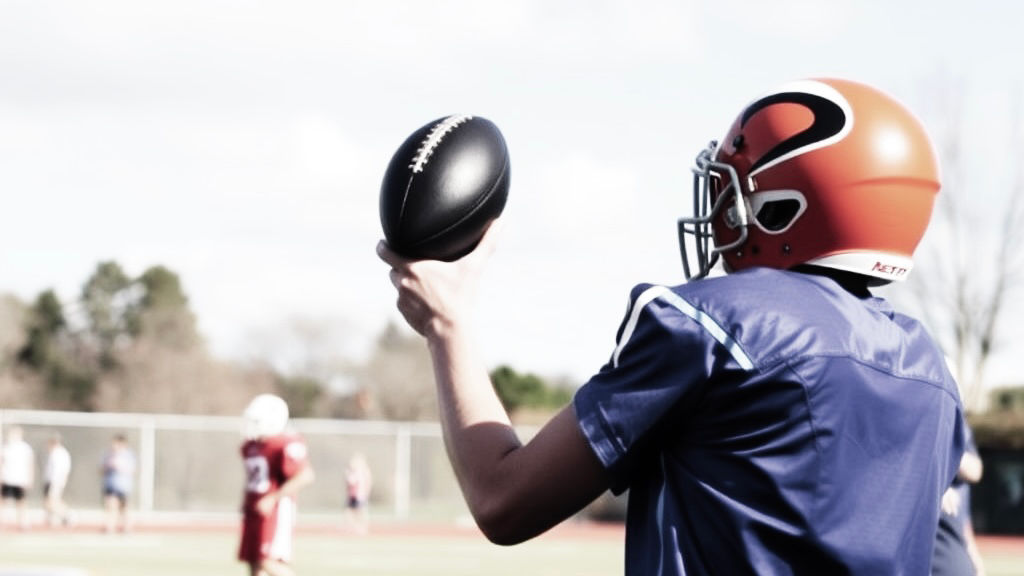
WHERE I STAND On The Future of School Athletics in Pinellas County

By Curtis Campogni, Candidate for Pinellas County School Board District 3 (At-Large)
Recently, Pinellas County Schools approved a $50 participation fee for student athletes.
This story isn’t really about fifty dollars.
It’s about a series of decisions, happening locally and across Florida, that are slowly making money a larger part of the youth athletics conversation.
A participation fee to play school sports in Pinellas County.
Florida’s CS/CS/SB 178, the “Teddy Bridgewater Act,” allowing high school head coaches to personally provide financial support for student-athletes such as meals or transportation.
Proposals to increase coaching pay with additional outside funding and community support.
And Florida’s FHSAA Name, Image, and Likeness (NIL) bylaw, permitting high school athletes to earn money through endorsements and sponsorships while maintaining eligibility.
Each decision makes sense on its own.
But school board leadership has a responsibility to look at direction, not just individual steps.
Why this matters to me
I am a strong believer in youth sports.
Few things in a school teach character like athletics.
Teamwork.
Accountability.
Handling loss.
Earning trust from peers.
Learning to lead when you’re tired and frustrated.
For many students in Pinellas County Schools, sports are the place they first feel competent.
For others, it is the reason they stay connected to school at all.
So this isn’t about resisting athletics evolving.
It’s about protecting what makes school athletics educational instead of transactional.
The real question
None of these decisions, by themselves, break school athletics.
But together they ask a bigger question:
When funding models change, does the purpose slowly change with them?
At first, families help offset costs.
Then some programs fundraise more than others.
Then outside money influences opportunity.
Not intentionally.
Just gradually.
So this story isn’t about a $50 sports fee in Pinellas County alone.
It’s about whether participation stays an opportunity — or slowly becomes access dependent.
If we stop noticing the direction
I don’t believe Pinellas County school sports are commercialized today, and I won’t pretend to speak for every district in Florida. My responsibility is to notice direction early so we never arrive there unintentionally.
But systems shape behavior over time.
If athletics keeps moving closer to money, branding, and value, behavior eventually follows.
We could reach a point where parents in the stands are not just cheering, but tracking performance differently.
Where highlights are clipped and compared in real time.
Where live betting apps exist in the same space as student competition.
Where a freshman’s performance carries social and financial pressure they never asked for.
Not because anyone set out to create that culture.
But because activities began resembling markets.
And when activities resemble markets, people naturally begin acting like investors.
That future isn’t inevitable.
But thoughtful school board policy now determines whether it stays unlikely.
“Money has always been part of sports”
Some will understandably say money is already part of youth athletics.
And they’re right.
At the college level, athletics is a business.
Recruiting attention often begins during high school years.
Communities have always fundraised, sold concessions, and supported teams.
But historically, money supported school sports.
It did not define school sports.
There is a difference between outside influence touching an activity and the activity being structured around financial outcomes.
When funding becomes a primary driver of decisions, priorities begin to shift.
Programs with more backing gain advantages.
Attention follows marketability instead of participation.
And slowly the experience changes not only for athletes, but for the community around them.
Public schools have traditionally been community centers, places where families gather for belonging, not investment.
If school athletics begins operating like a marketplace, the impact won’t just be felt by players.
It will reshape how communities experience their own schools.
The equity we rarely see
Cultural shifts rarely remove opportunity all at once.
They narrow it quietly.
When participation starts to feel tied to money, attention, or visibility, most families will still find a way to make it work.
But some students won’t raise their hand anymore.
Not because they were told no.
Because they assumed no.
The student who decides not to try out.
The one who avoids bringing home the form.
The one who believes it probably isn’t meant for them.
Schools rarely see those moments, because they never enter the system.
We measure rosters.
We don’t measure hesitation.
But those invisible decisions shape lives far more than the visible ones.
What school leadership should do
We shouldn’t eliminate community support for athletics.
We should guide it.
Responsible school leadership in Pinellas County means putting guardrails in place while programs evolve:
• Maintain accessible and confidential participation fee waivers
• Monitor participation rates to identify students quietly opting out
• Require transparency around fundraising differences between schools
• Establish clear expectations for parent conduct related to financial influence and recruiting behavior
• Provide student education on gambling risks connected to sports culture
• Restrict sports betting applications and wagering activity on school campuses and at school athletic events
The goal is not stopping change.
The goal is making sure change serves students first.
Where I stand
Let me be clear about what this is not.
I do not oppose the increased participation fee if the money truly offsets costs directly connected to the team and students participating.
I do not oppose the Teddy Bridgewater Act.
Frankly, it was unreasonable to suspend a coach for helping his players. I buy meals for my mentee. That should never be treated as misconduct when the intent is care, not recruiting.
And I do not oppose increasing coach salaries.
We want committed adults investing time in students, and that requires valuing their time appropriately.
These are not bad decisions.
But good decisions still need guardrails when they begin pointing in the same direction.
My concern is not any one policy.
It is the long-term shift that can happen when financial influence slowly becomes part of participation.
School athletics should remain a place where effort determines opportunity, not access to resources.
So the question for school leadership is simple:
As these changes continue, are we protecting character development, or unintentionally redefining the activity?
Because once culture changes, policy rarely catches up fast enough to undo it.
Public education is not only academics.
It is belonging.
And the future of school athletics in Pinellas County will be decided not by one vote, but by whether we guide its direction early enough.
— Curtis Campogni
Candidate for Pinellas County School Board, District 3 (At-Large)
Disclaimer: The views expressed here are solely those of Curtis Campogni, Candidate for Pinellas County School Board, District 3 at Large, and do not represent the official position of any organization or governing body.


Comments